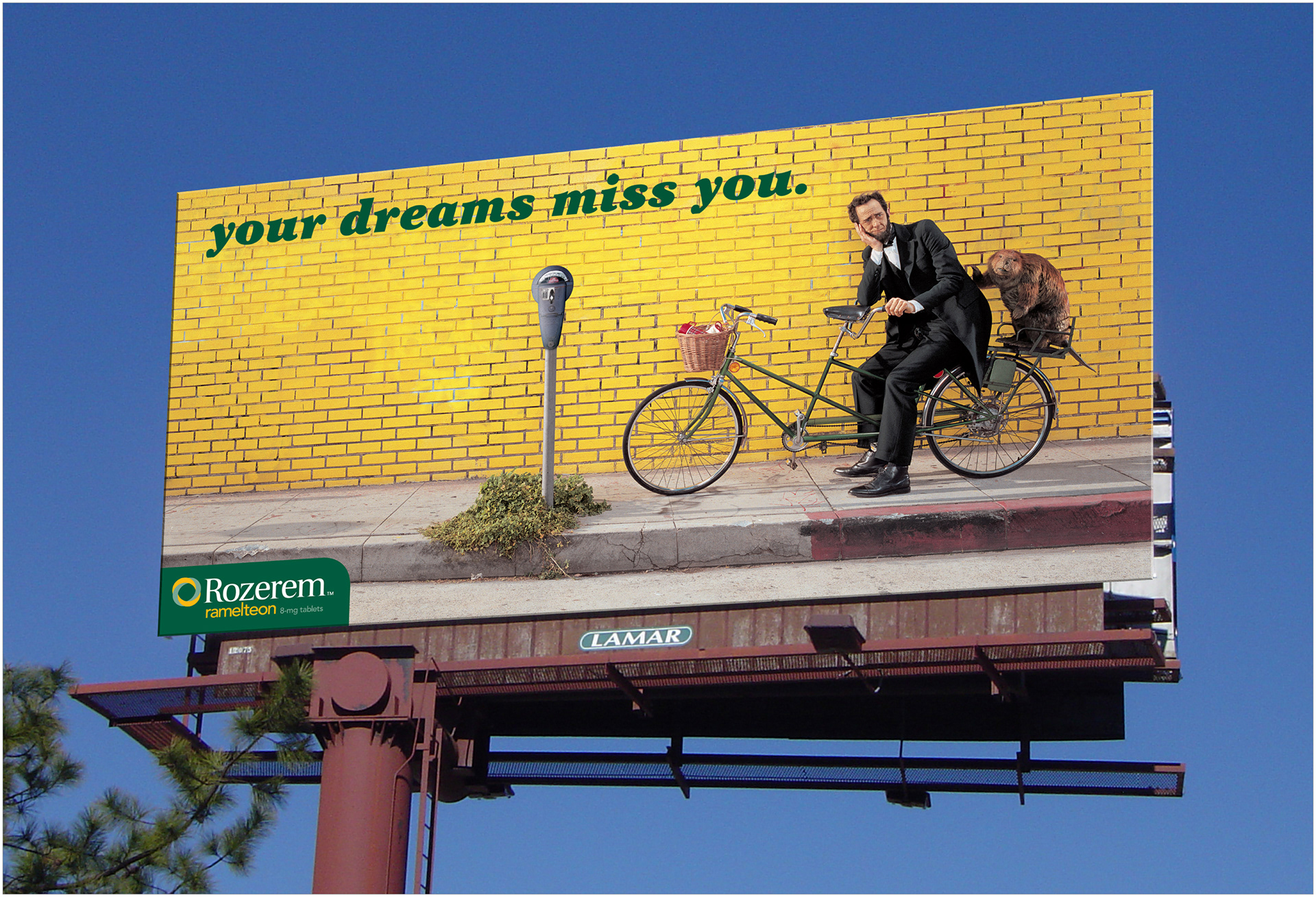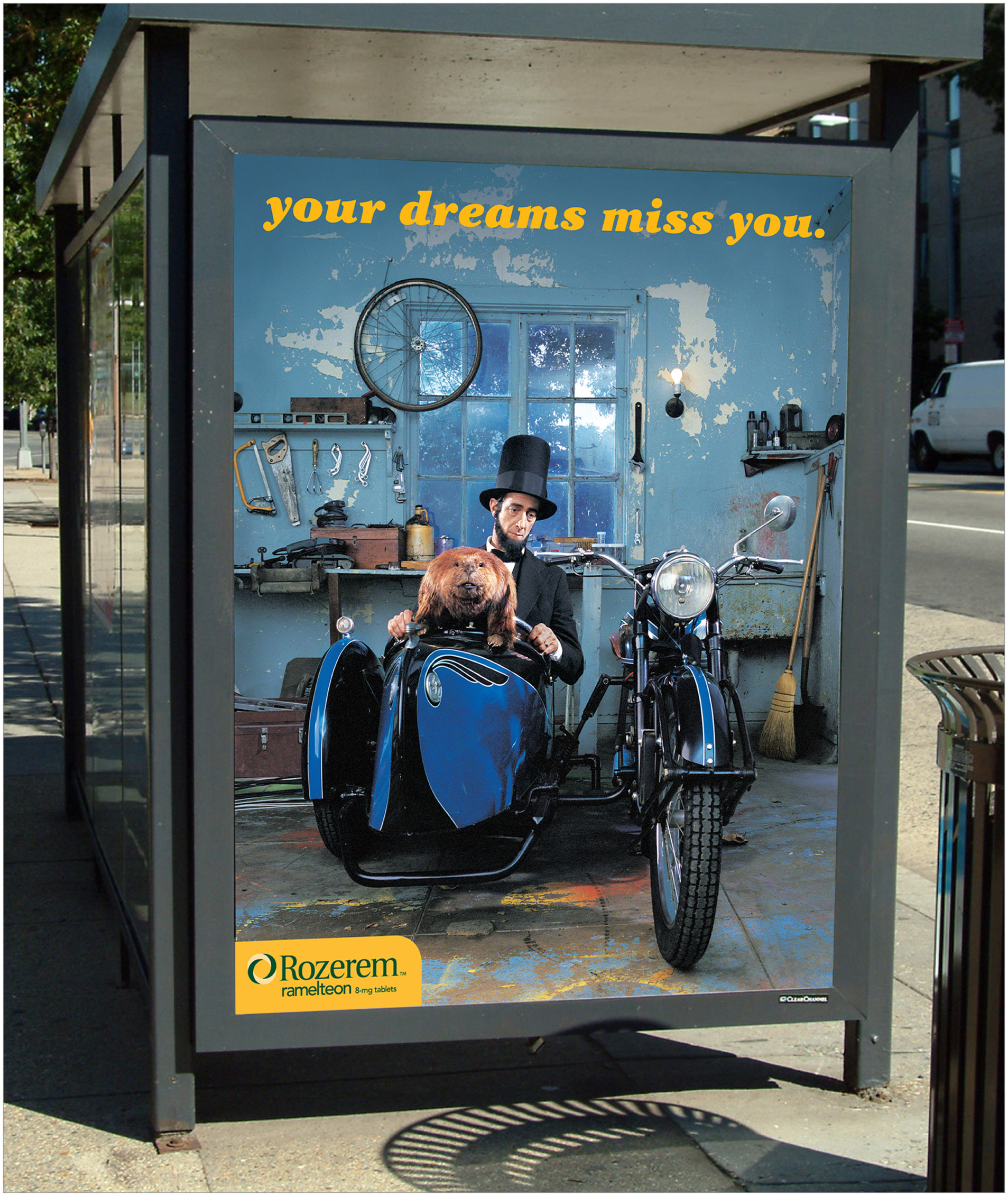
Situation: The sleep aid market was crowded with established brands like Ambien and Lunesta dominating consumer mindshare. Unlike these competitors, Rozerem (ramelteon) is non-addictive—a key differentiator, but one that needed to be communicated compellingly to stand out.
Insight: For millions struggling with insomnia, the real loss wasn’t just sleep—it was the rich, restorative world of dreams.
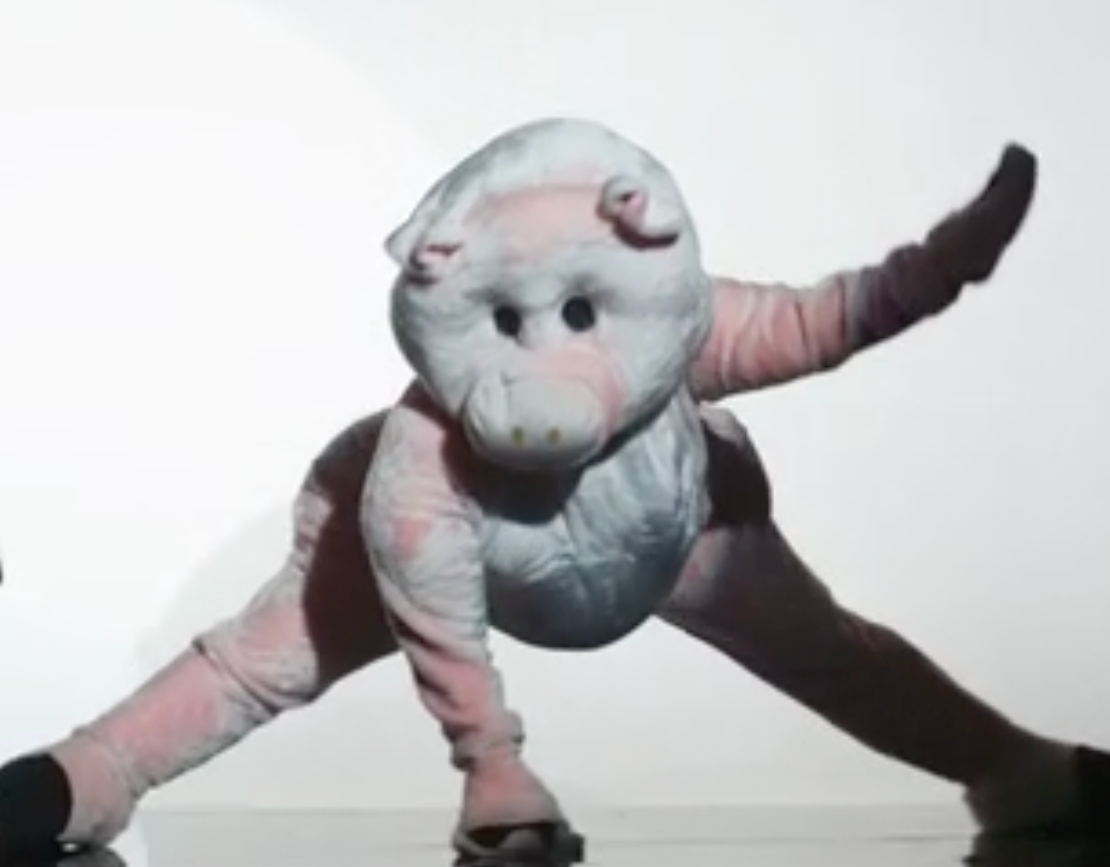
Idea: Rather than focus on sleep as a utility, we focused on the emotional loss of dreaming, positioning the product as a means to reconnect with one’s dreams whenever they wanted, due to the non addictive nature of the drug. The surreal, whimsical tone reinforced the message that restful sleep is a gateway back to dreaming. And it can be done without the fear of addiction.
Results: Monthly sales reached $10.5M in October, up from $6.31M dollars in July, when the campaign launched.
Annual sales rocketed to $76.2M from $13.3M dollars in the launch year.
Recognition: Kelly Awards l Adweek l Ad Age l Communication Arts
Role: Print & Social Concept Development l Writer
Credit: Concept/TV Development - Dan Consiglio, CD
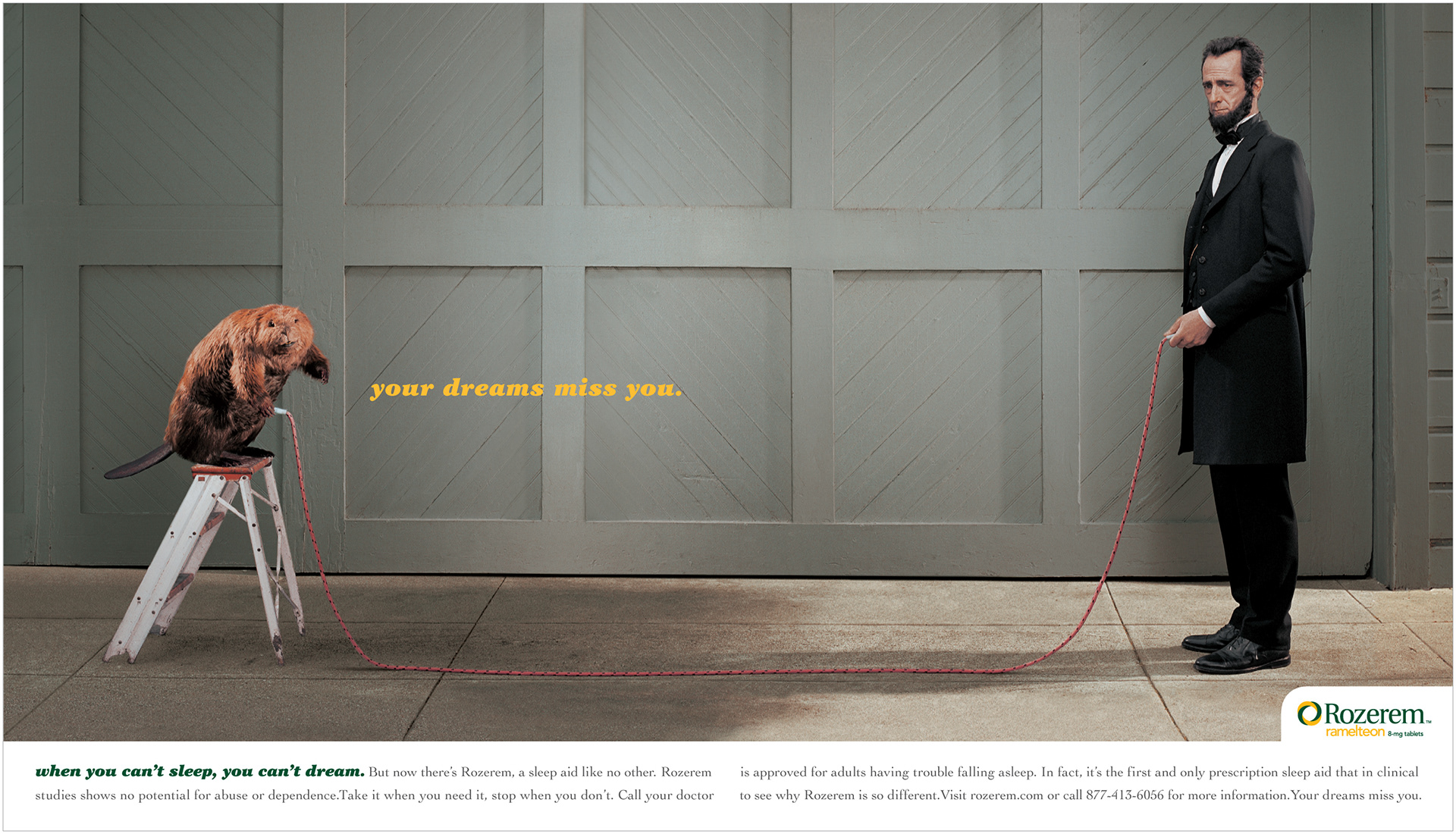
Your dreams miss you.
When you can’t sleep, you can’t dream. But now there’s Rozerem, a sleep aid like no other. Rozerem is approved for adults having trouble falling asleep. In fact, it’s the first and only prescription sleep aid that in clinical studies shows no potential for abuse or dependence. Take it when you need it, stop when you don’t. Call your doctor to see why Rozerem is so different. Visit rozerem.com for more information.